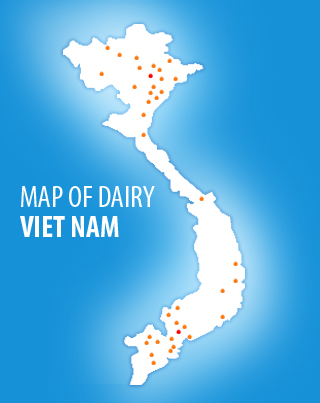



Dairy in Vietnam
Indiana Dairy Expands Herd To Secure Next-generation Succession - EDairy News English
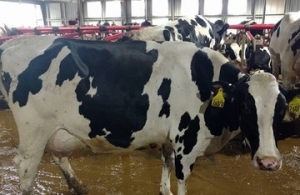
Union-Go Dairy in Randolph County adds 650 cows to build commercial scale, support sibling equity, and create entry pathways for the next generation.
Commercial dairy operations across the United States Midwest are leveraging strategic herd expansion and structured business succession to secure multi-generational continuity, as demonstrated by Union-Go Dairy in Randolph County, Indiana. Co-owner Sanne Goltstein highlighted that the family enterprise—which originated with 1,200 cows after immigrating from the Netherlands in 2003—is executing its largest capital expansion project to date by adding approximately 650 cows. The herd addition brings the operation’s milking herd past 1,750 head. Far from expanding purely for gross liquid volume, the strategic investment is designed to provide sufficient commercial scale to absorb the living withdrawals, management equity, and career opportunities needed to transition the next generation of family members into active farm leadership.
In an economic climate defined by volatile farmgate milk checks, elevated replacement animal costs, and rising interest rates, structural business expansion has become a primary survival strategy for family-held commercial dairies. Goltstein noted that while incremental additions have occurred over the past two decades, generational transfers require substantial step-changes in operational cash flow. Sibling equity partners—comprising Goltstein, her brother, and her sister—hold direct ownership stakes within the corporate farm structure, modeling their governance on the ownership pathways established by their father. Achieving sufficient enterprise scale ensures that incoming family members can enter specialized management roles—spanning herd health, agronomy, and enterprise finance—without diluting the living standards or balance sheet stability of senior partners.
From a dairy cattle housing and herd management perspective, adding 650 milking cows requires rigorous investments in animal comfort and feeding logistics. Modern commercial expansions in the eastern Corn Belt typically demand the construction of cross-ventilated or tunnel-ventilated free-stall barns equipped with deep-bedded sand stalls to optimize resting times and maintain low somatic cell counts. Increasing daily herd size by more than 35 percent also places greater demands on milking parlor throughput and lagoon manure storage capacities. Dairy operators must optimize total mixed ration (TMR) delivery schedules, ensure consistent dry matter intake across high-producing pens, and utilize automated cow-monitoring technologies to maintain peak milk yields and reproductive conception rates across an expanded herd footprint.
From an enterprise finance and succession planning standpoint, tight dairy margins make capital efficiency paramount when taking on expansion debt. Constructing modern free-stall housing, expanding automated milking parlors, and procuring feed inventories require significant debt commitments that must be serviced through sustained milk component sales. Under Federal Milk Marketing Order pooling formulas, maximizing pounds of butterfat and protein per cow provides the gross margin necessary to withstand low baseline milk price cycles. By establishing formal legal entities, transparent equity-transfer agreements, and clear performance metrics among family partners, commercial operations lower intra-family friction, maintain lender confidence, and protect farm balance sheet equity against macroeconomic shocks.
At the farmgate procurement and regional dairy processing level, growing dairy herds in east-central Indiana align with expanding regional processing capacity across the wider Midwest. With major multi-million-dollar processing expansions underway across the Great Lakes and Mid-Atlantic milk sheds, commercial cheese, fluid, and cultured dairy manufacturers depend on reliable, high-volume raw milk suppliers within efficient hauling radiuses. Large-scale family dairies capable of shipping consistent, chilled, high-quality bulk tankers daily capture competitive processor premiums and hauling efficiencies. Heading into 2027, the proactive expansion of operations like Union-Go Dairy highlights how disciplined capital investment and proactive succession planning remain essential to preserving family dairy legacies and driving rural economic growth across the American dairy sector.